Activation
Adsorption is a crucial process in environmental management and industrial applications, where pollutants or particles adhere to the surface of a different material due to their oppositely charged nature. This phenomenon is particularly valuable for separating mixtures that are otherwise challenging to isolate. The effectiveness of adsorption hinges on the specific surface area of the material used; a larger surface area provides more adsorption sites, enabling the capture of a greater volume of foreign particles.
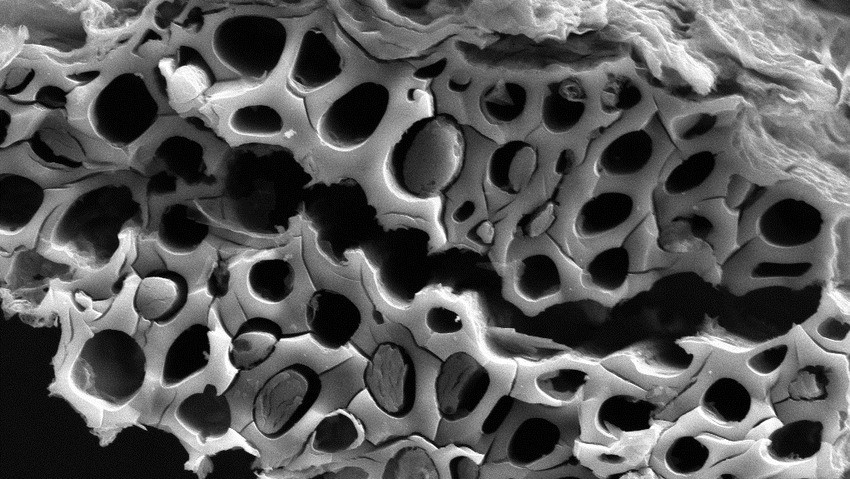
Carbon-rich materials are ideally suited for achieving high surface areas. When the carbon matrix is subjected to temperatures of up to 1000 degrees Celsius, the organic chemical bonds break, resulting in a significantly more porous structure. The introduction of intercalating or activating agents—such as KOH, NaOH, K2CO3, steam, or CO2 gas—further enhances this process by facilitating bond breakage. In industrial settings, steam is often the preferred agent due to its ease of generation and operation. Additionally, the steam-carbon reaction produces hydrogen as a valuable by-product, which can be efficiently repurposed as a fuel source.
At elevated temperatures, the reaction between steam and carbon creates an extensive porous network, dramatically increasing the material's surface area. The resulting pores are categorized into three types: micropores (<2nm), mesopores (2-50nm), and macropores (>50nm). These pores serve as traps, effectively adsorbing and removing impurities.
The production of activated carbon has historically been hindered by significant challenges, including the need for large machinery, extensive space, and substantial capital investment. Traditional rotary kiln technology, which is widely used in the industry, relies on conventional fuels to achieve the high temperatures required, typically around 1000 degrees Celsius. However, these technical limitations have spurred ongoing research and development efforts aimed at optimizing existing technologies and exploring innovative alternatives.
Circular Ecotech is at the forefront of this innovation, pioneering microwave-assisted technology to enhance the carbonization and activation processes. Our cutting-edge approach significantly reduces the time, energy consumption, and emissions associated with producing activated carbon, offering a more efficient and sustainable solution for the industry.